
Garment Waste From Walmart, Disney, Other Major Brands Continues to Fuel Cambodian Brick Kilns
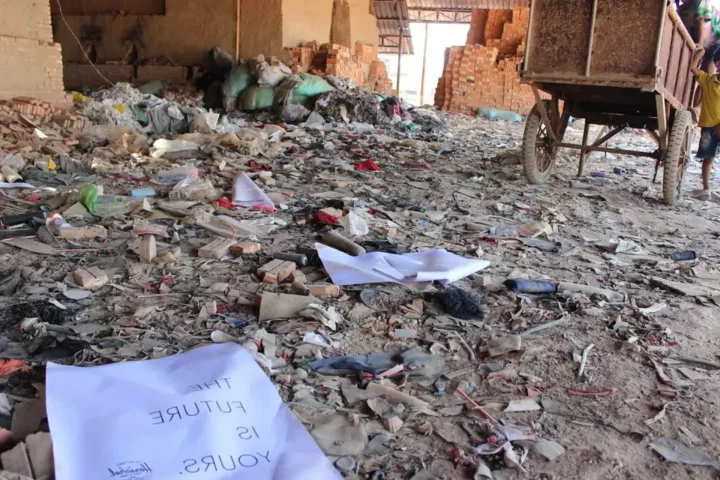
“The future is yours,” a white cloth proclaims from the ground of a brick kiln littered with discarded garment waste. The scrap, bearing the logo of the Canadian backpack company Herschel Supply Co., appears to be a piece of the brand’s “perfect diaper bag” with material made from “100% recycled post-consumer water bottles.” A group of brick workers’ children play among the piles of offcuts with labels from other major clothing brands: Adidas, Reebok, Madewell.
Here in Kandal province, about an hour’s drive from Phnom Penh, strips of factory textile off-cuts – the unused cloth and scraps left over from producing clothes – spill out of trash bags stacked up along the length of the kilns, each with a set of soot-covered chimneys peeking out above a metal roof. On the other side of the kilns, rows and rows of unfinished bricks wait to be baked.
Heng, a nearby worker in his 20s who requested not to use his real name for fear of retribution, handles loading finished bricks onto trucks and driving them offsite to customers. He dropped out of school in the 5th grade and then started working at brick factories to support his family. His parents, who began working at the factory when they married, retired due to old age, leaving Heng to support them and a younger sibling who was ill.
He says the kiln burns garment waste because, at $100 a truck load, it is seven or eight times cheaper than buying wood.
“It has an unpleasant burning smell and it affects our health. I cough and something black comes out of me,” he says, speaking to CamboJA News during a break from stacking bricks onto a truck bed.
Nearby, another worker in her early 40s says she owes the owner about $5,000 from loans she took out when she and her child were sick.
“I cough and get sick easily. The coughing is what impacts me the most,” she says.
The burning of pre-consumer scraps of fabric discarded by garment manufacturers has been a persistent problem at Cambodian brick kilns, along with other violations such as child labor and debt bondage. A downturn in the construction business during the pandemic has left brick factory owners searching for any way to cut costs as the price of bricks has plummeted. One tactic is illegally purchasing and incinerating garment offcuts to fuel the kilns, a practice that harms the health of workers and nearby communities.
Despite news coverage and independent research over the past six years highlighting harms of brick factories burning garment waste, CamboJA News found waste with branding from over 35 international brands and companies at brick kilns between February and April of 2024 in Kandal and Prey Veng provinces. Additionally, CamboJA journalists found documents with the names of seven garment manufacturers at the kilns. The reporters visited nine brick factories and spoke to over 15 workers, both on and off worksites, and traced the journey of these scraps from garment factories to scrap businesses to kilns.
The Cambodian Labor Union was established on April 9, 2006 and registered at No KB / VK on December 31, 2008 at the Ministry of Labor and Vocational Training, a democratic and independent federation. Currently, CLC has 124023 members from 10 member federations, associations and unions ...
Quick Links
Contact Us
- # 2.3G, Street 26 BT, Thnot Chrum Village, Sangkat Boeung Tumpun 2, Khnan Mean Chey, Phnom Penh.
- 087 888 959 / 012 509 709Mon-Fri, 8am until 5pm
- clc.cambodia@online.com.khWe reply within 24 hours