
Minimum wage of workers / employees in Cambodia
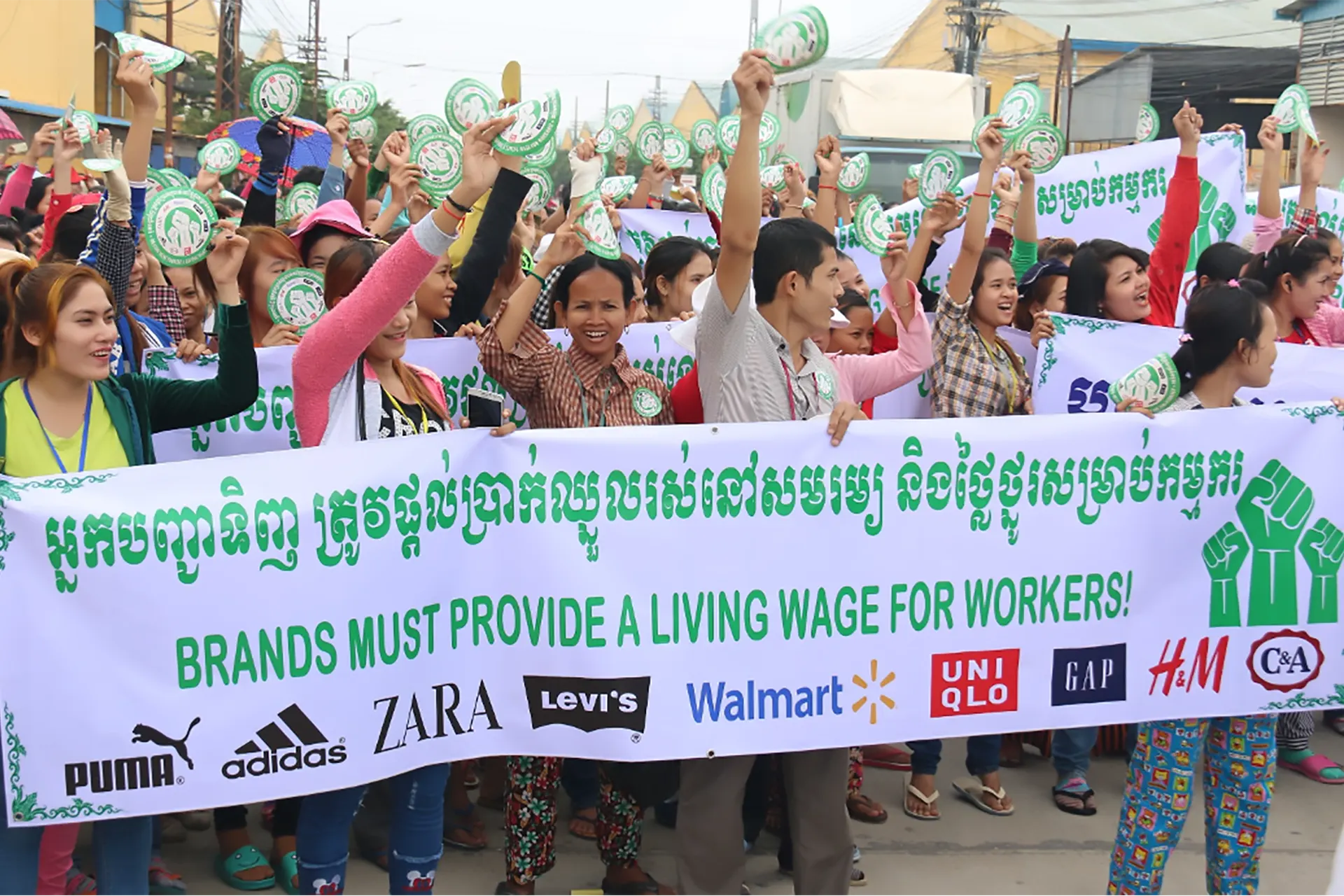
Wages are the main focus of workers defined in working conditions after working hours and occupational health and safety. In Cambodia, there are some definitions and principles in the labor law. There is also a negotiated minimum wage. Recently, setting the minimum wage is a popular issue in the labor sector, especially in the garment sector.
According to the minimum wage law, labor law and international labor conventions and past experience, in order to receive the minimum wage, unions and workers must act on their own in the tourism, construction and agriculture sectors. Which is a priority after the garment sector. Trade union representatives should also start preparing proposals to the Ministry of Labor for the attention of the Ministry or the National Wage Council. As a matter of principle, wages are wages or services that can be charged as defined in an employment contract or national law. This money must be paid by the employer (worker) directly to the worker unless the worker agrees to pay in other ways. Wages must be paid by the hour and at the workplace at least twice a month for workers and once a month for employees. Wages are prohibited from deducting debts if they affect the living expenses of workers and their families.
For the current payroll, there is no specific limit, the employer provides
Workers are negotiated according to the type of work and the talent of the workers. The current minimum wage is limited to the textile, garment and footwear sectors, while other sectors have not yet been set. This limitation comes as unions in the sector have been protesting since 2000.
Wages stipulated in Article 104 of the Labor Law stipulate that the minimum wage must be equal to the guaranteed minimum wage, that is, to ensure that all workers have a decent standard of living in accordance with human dignity. . Article 107 states that the elements to be taken into account for determining the minimum wage must be at least: the needs of the workers and their families based on the general wage level in the country, the cost of living, the social security and living standards; Compare from one group to another.
Factors of the economic sector, including the need for economic development, productivity and benefits to be achieved and maintain a high level of employment. This article is also in line with Convention No. 131 on the Minimum Wage Setting of the International Labor Organization 1970.
Based on this principle, after the strikes in late 2013 and early 2014, the International Labor Organization (ILO) came to the technical assistance and asked the three parties in Cambodia to determine the wages of garment workers.
On April 24-25, 2014, the agreement between the employers’ association (GMAC) and the union was signed and in that agreement agreed on the following principles: Must negotiate every year 2. Must take the principle of win-win 3. The principle of consensus must be adopted in case of refusal to vote and 4. Use of state data.
Economic and social reasons must be used as the basis for calculating the minimum wage and divided into 7 points such as: 1. Family situation 2. Inflation rate 3. Living cost 4. Productivity 5. National competitiveness 6. Labor market situation and 7. Profit level of the sector.
By 2020, the minimum wage in the garment and footwear sector will be $ 190 and other benefits such as a regular work bonus of US $ 10 and travel expenses of US $ 7. In 2021, the minimum wage will increase to $ 192, for a total of $ 209.
Despite the wage restrictions in the sector, wages are still low compared to the cost of living, they complain that employers increase their pay too much.
In 2018, the Law on Minimum Wage was enacted, which is similar to Labor Law and Convention No. 131 of the International Labor Organization (ILO). In particular, Article 5 also states similar to Articles 104 and 17 of the Labor Law.
The law also stipulates the establishment of a National Minimum Wage Council, which has the role of advising the Minister of Labor to issue a proclamation on the minimum wage. In other areas, the government is also pushing for new wages.
The Cambodian Labor Union was established on April 9, 2006 and registered at No KB / VK on December 31, 2008 at the Ministry of Labor and Vocational Training, a democratic and independent federation. Currently, CLC has 124023 members from 10 member federations, associations and unions ...
Quick Links
Contact Us
- # 2.3G, Street 26 BT, Thnot Chrum Village, Sangkat Boeung Tumpun 2, Khnan Mean Chey, Phnom Penh.
- 087 888 959 / 012 509 709Mon-Fri, 8am until 5pm
- clc.cambodia@online.com.khWe reply within 24 hours